






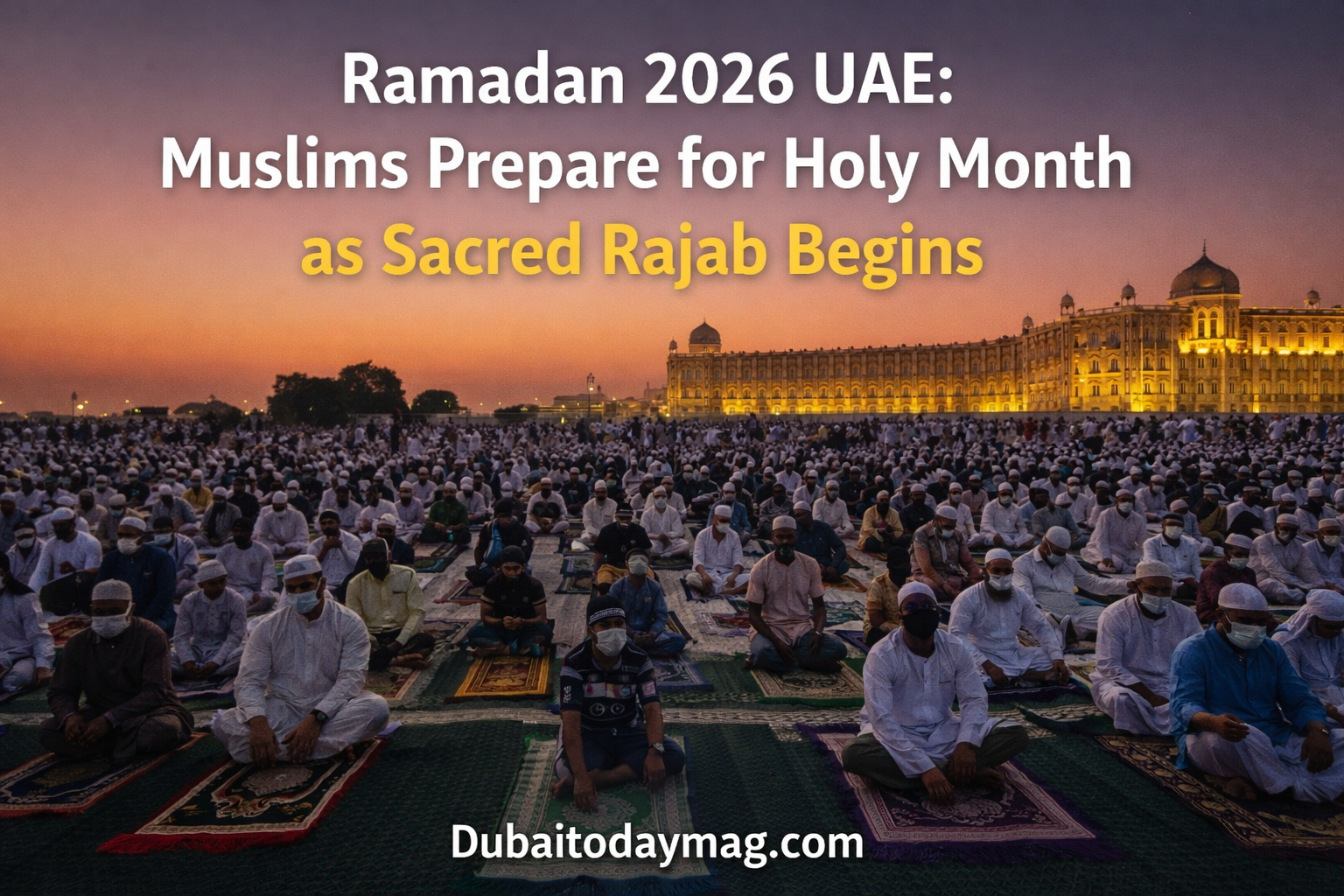
Ramadan 2026 UAE preparations begin as Rajab starts. Sheikh Nasser Al Hammadi explains encouraged worship practices and warns against innovations during the sacred month.
As the sacred Islamic month of Rajab begins, Muslims throughout the UAE and worldwide are commencing their spiritual preparations for Ramadan 2026, the holiest month in the Islamic calendar. This preparatory period holds special significance as believers focus on increasing worship, seeking forgiveness, and establishing habits that will carry them through the blessed days ahead.
Ramadan 2026 UAE: Understanding the Preparatory Journey
The arrival of Rajab marks the beginning of a three-month spiritual journey that Muslims undertake in preparation for Ramadan 2026. This period, consisting of Rajab, Sha’ban, and culminating in Ramadan, represents a gradual intensification of worship and spiritual discipline designed to help believers reach their peak devotion during Islam’s most sacred month.
For Muslims in the UAE, this preparatory period takes on particular significance given the country’s diverse Muslim community representing numerous nationalities and Islamic traditions. Understanding the authentic Islamic teachings regarding these months helps ensure that worship remains rooted in the Quran and Sunnah rather than cultural innovations.
Sheikh Nasser Al Hammadi from Sharjah Islamic Affairs recently provided crucial guidance during a lecture broadcast live on Instagram on Tuesday, December 23, 2025. His comprehensive explanation of proper worship during Rajab offers UAE Muslims clear direction as they begin their Ramadan 2026 preparations.
The Sacred Month of Rajab: Islamic Significance
Sheikh Al Hammadi explained that Rajab holds a distinguished position as one of the four sacred months (Al-Ashhur Al-Hurum) mentioned in the Quran. These four months—Dhul Qa’dah, Dhul Hijjah, Muharram, and Rajab—carry special weight in Islamic teachings, with both sins and good deeds having amplified significance during these periods.
“Rajab is one of the four sacred months in the Islamic Hijri calendar, during which wrongdoing carries greater sin and righteous deeds earn greater reward,” Sheikh Al Hammadi emphasized, highlighting the heightened spiritual stakes during this time.
The Quran references these sacred months in Surah At-Tawbah (9:36), where Allah states that four months are sacred since the creation of the heavens and earth. During these months, pre-Islamic Arabs traditionally ceased warfare, recognizing the sanctity of the period. Islam maintained this recognition while adding spiritual dimensions to the observance.
Rajab’s Role in Ramadan 2026 Preparation
Sheikh Al Hammadi used an agricultural metaphor to explain Rajab’s preparatory function: “Rajab prepares Muslims for Sha’ban and Ramadan. It is like a farmer who begins by planting seeds, then watering them, then caring for the crop until the harvest.”
This analogy illustrates how spiritual development requires gradual cultivation rather than sudden intensity. Just as farmers cannot expect crops to flourish without proper preparation of soil and careful tending, Muslims cannot expect to achieve optimal spiritual states during Ramadan without preparatory work in preceding months.
The three-month journey from Rajab through Sha’ban to Ramadan allows believers to:
Establish consistent worship patterns that become habitual by Ramadan’s arrival. Starting increased Quran recitation, voluntary prayers, and charitable giving during Rajab makes these practices feel natural by Ramadan.
Address spiritual weaknesses through gradual improvement. Rajab provides time to identify and work on areas needing development, whether controlling anger, improving prayer concentration, or strengthening community connections.
Build physical stamina for Ramadan’s demands. The long fasting days, extended night prayers (Taraweeh), and increased worship require physical conditioning that gradual preparation facilitates.
Deepen Islamic knowledge about Ramadan’s rulings, blessings, and opportunities. Using Rajab to study Ramadan fiqh ensures proper observance when the blessed month arrives.
Sheikh Al Hammadi’s Instagram Lecture: Key Teachings
The Sharjah Islamic Affairs lecture broadcast on Instagram reached thousands of UAE Muslims seeking authentic guidance on Rajab observance. Sheikh Al Hammadi’s teachings emphasized balance—increasing general worship while avoiding practices lacking Islamic foundation.
His lecture addressed growing concerns among Islamic scholars about innovations (bid’ah) creeping into religious observance, particularly during sacred months when believers’ enthusiasm for worship sometimes leads them to adopt practices without proper Islamic justification.
The Instagram platform’s selection for the lecture reflects Islamic institutions’ adaptation to digital communication methods, ensuring religious guidance reaches Muslims where they spend significant time. The live format allowed viewers to submit questions and receive immediate clarification, creating interactive religious education appropriate for modern contexts.
Encouraged Worship Practices During Rajab
Sheikh Al Hammadi clarified that while no worship acts are prescribed exclusively for Rajab, Muslims should increase general acts of obedience that are encouraged throughout the year. This distinction prevents the innovation of practices specific to Rajab while encouraging overall spiritual enhancement.
General Voluntary Worship
Muslims in the UAE preparing for Ramadan 2026 can engage in various general worship practices during Rajab:
Increased Quran recitation and study. Rajab provides opportunity to establish regular Quran reading that will intensify during Ramadan. Many Muslims aim to complete at least one full Quran reading during Rajab as preparation.
Voluntary prayers (Nafl Salah). Beyond the five obligatory daily prayers, voluntary prayers such as Duha (mid-morning), Tahajjud (late night), and additional Sunnah prayers earn rewards amplified during sacred months.
Dhikr (remembrance of Allah). Regular recitation of phrases glorifying Allah, seeking forgiveness, and invoking blessings upon the Prophet Muhammad (PBUH) strengthens spiritual connection and prepares hearts for Ramadan.
Charity and helping others. Giving to those in need during Rajab establishes habits of generosity that should peak during Ramadan. The UAE’s strong charitable culture makes this particularly accessible.
Seeking knowledge. Attending religious lectures, studying Islamic texts, and learning about faith obligations represents worship that benefits both Rajab observance and Ramadan preparation.
Making dua (supplication). Sacred months are blessed times for dua, and Muslims should take advantage by regularly calling upon Allah with sincere prayers.
Fasting During Rajab: Balanced Approach
Sheikh Al Hammadi addressed fasting during Rajab, explaining that while voluntary fasting is generally encouraged in Islam, Muslims should not fast the entire month in a way that mimics Ramadan’s obligatory fast.
“The Prophet Muhammad (PBUH) did not complete a full month of fasting outside of Ramadan,” Sheikh Al Hammadi noted, citing prophetic practice as the model for believers.
He referenced that even during Sha’ban—the month immediately preceding Ramadan when the Prophet (PBUH) fasted most frequently—the Prophet did not fast the entire month. This establishes that Muslims should engage in voluntary fasting during Rajab and Sha’ban without making these months resemble Ramadan itself.
The Sheikh also mentioned that Umar ibn Al-Khattab (RA), the second Caliph of Islam, discouraged people from fasting all of Rajab specifically to prevent it from becoming confused with Ramadan’s obligatory fast.
This guidance helps UAE Muslims approach fasting during Rajab with proper understanding: voluntary fasting on some days is encouraged as general worship, but fasting the entire month or treating it as obligatory represents an innovation without Islamic foundation.
Practices Warned Against: Avoiding Innovation
A significant portion of Sheikh Al Hammadi’s lecture focused on warning against practices that lack authentic Islamic foundation. This emphasis addresses a crucial issue in contemporary Muslim practice: the tendency to adopt religious observances based on cultural tradition or weak narrations rather than authentic sources.
The Principle of Islamic Worship
Sheikh Al Hammadi stressed a fundamental Islamic principle: “The foundation of worship in Islam is adherence to what has been legislated, and introducing new religious practices is not acceptable.”
This principle, known as following the Sunnah and avoiding bid’ah (innovation), means Muslims can only worship Allah through methods He revealed in the Quran or that the Prophet Muhammad (PBUH) demonstrated through his practice and teachings.
“Muslims should not engage in any act of worship, add to it, or single it out, except based on what has been established in Islamic law, and must beware of introducing innovations into the religion of Allah,” Sheikh Al Hammadi cautioned.
This warning becomes particularly important during sacred months when enthusiasm for worship might lead believers to adopt practices without verifying their Islamic authenticity.
Specific Innovations to Avoid
Sheikh Al Hammadi identified specific practices that Muslims should avoid during Rajab:
Salat Al-Raghaib: This is a specific prayer some communities perform on the first Friday night of Rajab. Islamic scholars widely agree this practice lacks authentic foundation in the Sunnah and represents an innovation.
Special Rajab Umrah: While Umrah (lesser pilgrimage) is encouraged throughout the year, believing that Umrah specifically in Rajab carries special merit or is equivalent to Hajj represents an innovation. The Prophet (PBUH) did not single out Rajab for Umrah performance.
Specific fasting patterns: Fasting certain days of Rajab believing they carry unique significance specific to this month lacks Islamic foundation. The general merit of fasting exists, but assigning particular days in Rajab special status represents innovation.
Special gatherings or celebrations: Some communities hold special religious gatherings or celebrations specifically for Rajab’s beginning or certain nights within the month. These practices lack Quranic or Prophetic precedent.
Specific duas or recitations: Believing that particular supplications or Quran verses should be recited specifically during Rajab, or that doing so carries special reward unique to Rajab, represents innovation unless based on authentic evidence.
Why Avoiding Innovation Matters
Sheikh Al Hammadi’s emphasis on avoiding innovation isn’t mere legalistic strictness—it reflects deep theological reasoning:
Preserving religious purity: Islam’s teachings come from divine revelation, and adding human inventions dilutes the religion’s purity. What Allah revealed and His Messenger demonstrated is sufficient.
Preventing confusion: When innovations become widespread, new generations may confuse them with authentic Islam, perpetuating misunderstanding across centuries.
Avoiding implicit criticism of Islam: Introducing new worship implies that what Allah revealed was somehow insufficient, requiring human supplementation—an unacceptable notion in Islamic theology.
Following prophetic example: The Prophet Muhammad (PBUH) provided the perfect model for worship, and straying from his example represents spiritual danger.
How UAE Muslims Can Properly Observe Rajab
Based on Sheikh Al Hammadi’s guidance, UAE Muslims preparing for Ramadan 2026 should approach Rajab through authentic practices:
Increase General Worship
Rather than seeking Rajab-specific practices, Muslims should intensify worship acts encouraged throughout the Islamic year:
Pray the five obligatory prayers in congregation when possible, particularly for men in mosques. The UAE’s numerous mosques make this easily accessible.
Add voluntary prayers before and after obligatory ones, gradually building stamina for Ramadan’s extended worship.
Read Quran daily, working toward completing at least one full reading during Rajab. Many mosques offer Quran study circles that help with this goal.
Make regular charitable contributions, taking advantage of the UAE’s organized charity infrastructure and numerous humanitarian causes.
Attend religious lectures and learning circles to deepen Islamic knowledge before Ramadan.
Establish Healthy Patterns
Use Rajab to establish patterns that will benefit Ramadan observance:
Gradually adjust sleep schedules to accommodate pre-dawn meals (Suhoor) and early morning prayers that Ramadan requires.
Begin reducing caffeine dependence, making the coffee and tea abstinence during Ramadan fasting less challenging.
Practice mindful eating and moderation during Rajab, preparing for the discipline Ramadan demands.
Strengthen family spiritual practices, establishing home routines that will support Ramadan observance.
Connect With Community
The UAE’s diverse Muslim community offers rich opportunities for spiritual growth:
Attend mosque lectures and programs that proliferate during sacred months.
Participate in community service and charitable activities that Islamic organizations coordinate.
Connect with fellow Muslims from various backgrounds, enriching understanding of Islamic unity despite cultural diversity.
Support Islamic education initiatives helping younger generations understand authentic worship.
The UAE’s Islamic Infrastructure Supporting Ramadan Preparation
The United Arab Emirates provides exceptional infrastructure supporting Muslims’ spiritual development:
Islamic Affairs Departments
Each emirate maintains Islamic Affairs departments like Sharjah’s, which organize lectures, distribute educational materials, and provide religious guidance. These institutions ensure UAE Muslims access authentic Islamic teachings from qualified scholars.
The departments’ embrace of digital platforms like Instagram reflects commitment to meeting Muslims where they are, providing religious guidance through modern communication channels.
Mosques and Islamic Centers
The UAE’s thousands of mosques serve as community hubs for worship, education, and social connection. During Rajab and subsequent months, mosques increase programming to support Ramadan preparation:
Quran study circles help Muslims improve recitation and understanding.
Islamic knowledge lectures cover topics from creed to jurisprudence.
Community services including meals and support for those in need.
Youth programs engaging younger generations in Islamic education.
Charitable Organizations
The UAE hosts numerous charitable organizations facilitating Muslims’ desire to help others, a worship act particularly emphasized during sacred months. These organizations ensure that generosity reaches deserving recipients efficiently and transparently.
Looking Ahead to Ramadan 2026
As Rajab begins, UAE Muslims cast their sights toward Ramadan 2026, which will likely begin in late February or early March 2026, pending moon sighting confirmation. The three-month preparatory period from Rajab through Sha’ban allows believers to arrive at Ramadan spiritually, mentally, and physically prepared.
Expected Ramadan 2026 Dates
While exact dates depend on moon sighting, Ramadan 2026 is expected to begin around February 28 or March 1, 2026, lasting approximately 29-30 days. The UAE’s moon sighting committee will announce official dates closer to Ramadan’s expected arrival.
Ramadan in the UAE: Unique Aspects
Ramadan in the UAE features characteristics that enhance the spiritual experience:
Multicultural celebration: Muslims from around the world bring diverse traditions that enrich the UAE’s Ramadan experience while uniting around core Islamic practices.
Generous charity culture: The UAE’s leadership and people demonstrate exceptional generosity during Ramadan, with numerous initiatives supporting those in need locally and globally.
Adjusted work schedules: The UAE reduces working hours during Ramadan, allowing Muslims more time for worship, rest, and family connection.
Special programs and events: Mosques, Islamic centers, and community organizations offer extensive Ramadan programming including Taraweeh prayers, Quran competitions, and educational lectures.
Iftar hospitality: The UAE’s culture of hospitality reaches its peak during Ramadan, with numerous iftar meals offered at mosques, hotels, and community centers.
Sheikh Al Hammadi’s Message: Follow the Sunnah
The core of Sheikh Al Hammadi’s guidance emphasizes following authentic Islamic teachings as demonstrated by the Prophet Muhammad (PBUH):
“A Muslim should make proper, lawful use of this month by following the Sunnah of the Prophet (PBUH) in how he observed this month and all other months without singling out specific acts of worship or adding new ones.”
This message reminds UAE Muslims that true spiritual growth comes not from inventing new practices but from deepening commitment to established Islamic worship. The Prophet’s example provides complete guidance for spiritual development, requiring no human supplementation.
Conclusion: Beginning the Journey to Ramadan 2026
As Rajab begins, UAE Muslims embark on a three-month spiritual journey culminating in Ramadan 2026. This preparatory period offers opportunities to strengthen faith, deepen knowledge, and establish worship patterns that will bear fruit during Islam’s holiest month.
Sheikh Nasser Al Hammadi’s guidance provides clear direction: increase general worship acts that are always encouraged in Islam, avoid innovations lacking authentic foundation, and follow the Prophet Muhammad’s example in all aspects of religious observance.
For Muslims in the UAE, blessed with excellent Islamic infrastructure, supportive government policies, and a diverse community of believers, the path to Ramadan 2026 is clear. By properly observing Rajab and Sha’ban according to authentic Islamic teachings, they can arrive at Ramadan fully prepared to maximize the blessed month’s spiritual benefits.
The seeds planted during Rajab will grow through Sha’ban and harvest during Ramadan—if Muslims tend them properly through authentic worship, sincere intention, and adherence to the Sunnah. May Allah accept the efforts of all Muslims preparing for Ramadan 2026 and grant them the blessing of witnessing and properly observing the holy month.
Read More : William Rush Death Cause: Heartbreaking Truth About Waterloo Road Star’s Passing at 31
Reference By : khaleejtimes.com
