





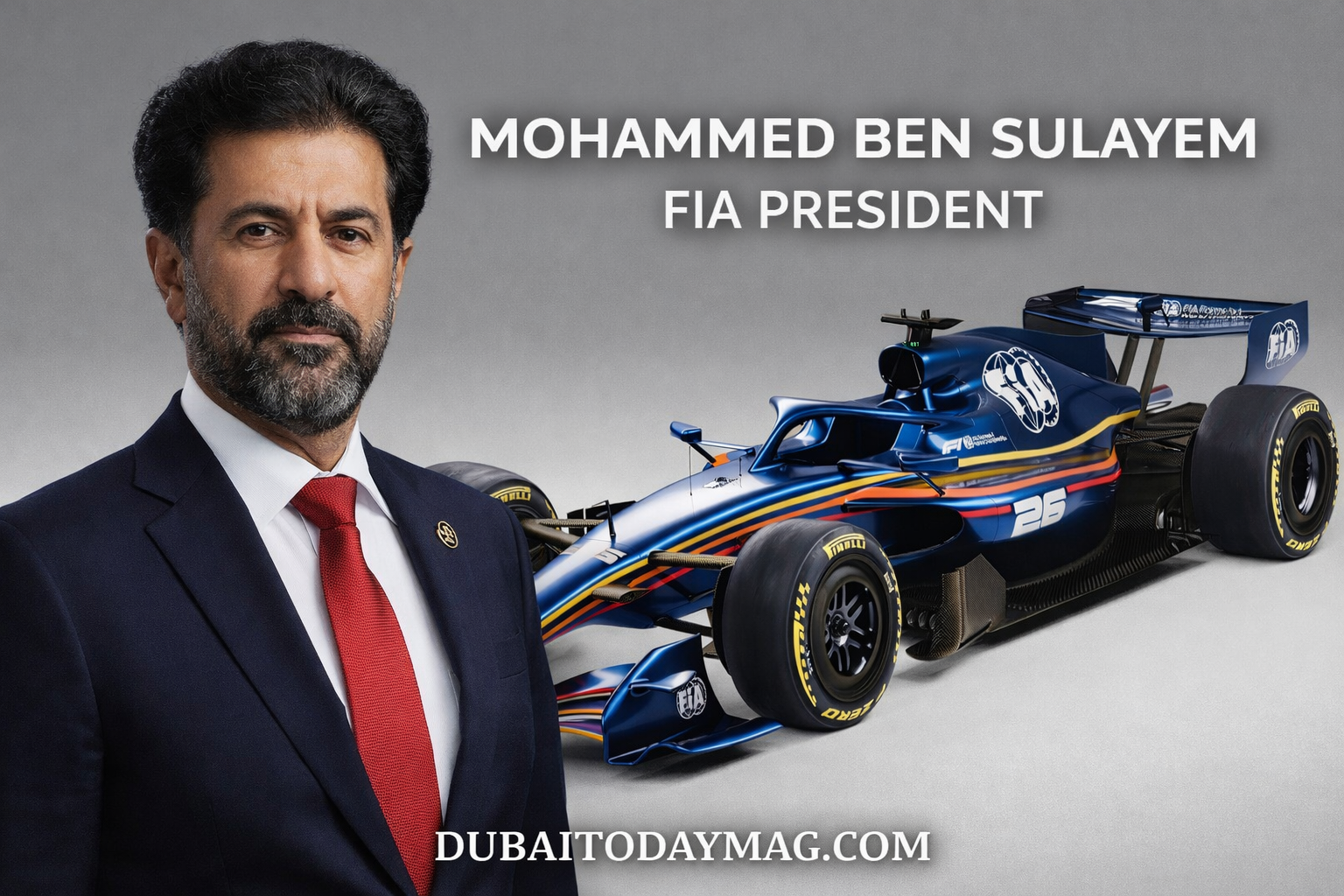
Mohammed Ben Sulayem begins second FIA presidency term ahead of Formula 1’s 2026 regulations overhaul. Discover how new rules will transform racing, safety, and sustainability.
Mohammed Ben Sulayem has officially begun his second term as president of the Fédération Internationale de l’Automobile (FIA), positioning himself at the helm of one of the most transformative periods in Formula 1 history. As the sport prepares for revolutionary 2026 regulations, Ben Sulayem’s leadership will guide Formula 1 through unprecedented changes affecting car design, competitive balance, driver safety, and environmental sustainability.
Mohammed Ben Sulayem FIA President: A Historic Second Term
The commencement of Mohammed Ben Sulayem’s second term as FIA president arrives at a pivotal moment for international motorsport. His re-election demonstrates confidence from FIA member organizations worldwide in his vision for Formula 1’s future and his ability to navigate the complex challenges facing modern motorsport.
Ben Sulayem first assumed the FIA presidency with ambitious goals for modernizing the organization’s governance, improving safety standards across all motorsport disciplines, and positioning Formula 1 as a leader in sustainable technology development. His second term will test his ability to implement these visions as Formula 1 undergoes its most comprehensive regulatory reset in decades.
The timing of his second term coincides precisely with the introduction of 2026 Formula 1 regulations that will fundamentally reshape how teams design cars, how drivers compete on track, and how the sport addresses environmental concerns. This synchronization between leadership and regulatory change creates both opportunities and challenges for Ben Sulayem’s presidency.
2026 Formula 1 Regulations: Complete Technical Overhaul
The 2026 Formula 1 regulations represent a full technical reset rather than incremental evolution. These comprehensive rule changes will affect every aspect of car design, from power units to aerodynamics to safety systems, creating what effectively amounts to a new generation of Formula 1 machinery.
Power Unit Revolution
The most significant changes for 2026 focus on Formula 1’s hybrid power units. The new regulations dramatically increase the electrical component of the hybrid system while reducing the traditional internal combustion engine’s contribution:
The electrical motor generator unit (MGU) will produce approximately 350 kilowatts of power, nearly doubling the current 120 kilowatt output. This substantial increase means that electric power will account for roughly half of the total power unit output during racing.
The internal combustion engine component will become smaller and more efficient, running on fully sustainable fuels. Formula 1’s commitment to 100% sustainable fuels represents a crucial step toward environmental responsibility while maintaining the sport’s high-performance character.
Energy recovery systems will capture and deploy significantly more electrical energy per lap. The enhanced recovery capabilities will reward efficient driving and strategic energy management, adding new tactical dimensions to racing.
These power unit changes aim to attract new manufacturers to Formula 1 by showcasing relevant technology that transfers to road car development. The emphasis on electrification and sustainable fuels aligns with automotive industry trends, making Formula 1 participation more attractive to manufacturers pursuing electric and hybrid vehicle programs.
Aerodynamic Philosophy Reset
Beyond power units, the 2026 regulations introduce radical aerodynamic changes designed to improve racing quality:
Reduced downforce levels will make cars more challenging to drive while decreasing the negative effects of following another car closely. Current regulations already attempted to address this issue, but 2026 rules take more aggressive approaches.
Active aerodynamic systems will debut in Formula 1, allowing specific components to adjust during races. These systems will optimize car performance for different track sections—maximizing downforce through corners while reducing drag on straights.
Smaller, lighter cars represent another key goal, though achieving significant size reduction presents challenges given safety requirements and hybrid power unit complexity. The regulations encourage weight reduction wherever possible without compromising driver protection.
Enhanced Safety Standards
Mohammed Ben Sulayem has consistently prioritized safety throughout his FIA tenure, and the 2026 regulations reflect this commitment:
Improved crash structures will protect drivers in more types of incidents. The regulations mandate stronger survival cells and enhanced impact absorption in critical areas.
Updated safety equipment requirements will ensure drivers benefit from the latest protective technology advances. Helmet standards, HANS devices, and driver suits continue evolving based on research and incident analysis.
Circuit safety improvements will accompany car regulation changes. The FIA continues upgrading track facilities, barriers, and runoff areas to provide maximum protection should cars leave the racing surface.
Closer Racing: The Primary Competitive Goal
The overarching objective driving 2026 Formula 1 regulations is enabling closer, more competitive racing. Formula 1 has struggled with processional races where aerodynamic turbulence prevents cars from following closely enough to attempt overtaking maneuvers.
The 2026 regulations attack this problem through multiple approaches:
Reduced aerodynamic wake: New car designs will produce less disruptive airflow behind them, allowing following cars to maintain better performance while running in proximity.
More powerful DRS effect: The drag reduction system will provide greater advantage to chasing cars, facilitating overtaking on designated track sections.
Equal performance targets: Regulations aim to narrow performance gaps between teams, creating grids where more competitors can realistically fight for victories rather than predetermined outcomes based on car superiority.
Strategic variety: Power unit energy management and active aerodynamics create additional strategic variables that reward driver skill and team tactical acumen beyond pure car performance.
These changes aspire to produce racing where multiple drivers and teams compete for wins throughout seasons rather than single teams dominating extended periods. The FIA and Formula 1 leadership believe closer competition will engage fans more effectively and grow the sport’s global audience.
Sustainability: Formula 1’s Environmental Commitment
Mohammed Ben Sulayem’s second term as FIA president emphasizes environmental sustainability as a core priority. The 2026 regulations represent Formula 1’s most significant sustainability achievements:
Sustainable Fuels
The introduction of 100% sustainable fuels for 2026 represents a breakthrough for motorsport environmental credentials. These fuels, derived from carbon capture, biomass, or synthetic production methods, achieve carbon neutrality by offsetting emissions during combustion with carbon removed during fuel production.
Formula 1’s sustainable fuel development provides valuable research benefiting global transportation. As road car manufacturers transition toward electrification, they continue producing internal combustion vehicles for markets where electric infrastructure remains limited. Sustainable fuels offer these vehicles pathways toward carbon neutrality.
The fuels will perform identically to traditional racing fuels, producing equivalent power output without requiring power unit redesign beyond normal technical evolution. This seamless transition demonstrates that sustainability need not compromise performance.
Increased Electrification
Doubling electrical power output to 350 kilowatts showcases Formula 1’s commitment to hybrid and electric technology development. As road car manufacturers invest billions in electrification, Formula 1 provides a high-profile proving ground for advanced electrical systems.
The enhanced hybrid systems will recover energy more efficiently during braking and potentially harvest energy from other sources. This research directly transfers to road car technology, making vehicles more efficient and reducing emissions.
Reduced Logistical Footprint
Beyond car technology, Formula 1 continues reducing its environmental impact through logistical improvements:
Calendar optimization groups geographically proximate races to reduce transportation distances between events.
Freight consolidation and efficient logistics planning minimize the carbon footprint of moving equipment worldwide.
Sustainable aviation fuel usage for necessary air travel reduces emissions from Formula 1’s global operations.
These comprehensive sustainability efforts position Formula 1 as a leader among global sports in environmental responsibility.
Mohammed Ben Sulayem’s Leadership Vision
Throughout his FIA tenure, Mohammed Ben Sulayem has articulated clear priorities that the 2026 regulations embody:
Governance and Transparency
Ben Sulayem has emphasized improved governance structures within the FIA, creating clearer processes for decision-making and greater transparency in how the organization operates. His leadership style emphasizes consultation with stakeholders while maintaining the FIA’s authority as motorsport’s governing body.
Safety Above All
Safety remains non-negotiable under Ben Sulayem’s presidency. The FIA continues investing in safety research, implementing improved standards across all motorsport categories, and learning from every incident to prevent future tragedies.
Sustainability Leadership
Ben Sulayem recognizes that motorsport must demonstrate environmental leadership to maintain social license. His presidency actively promotes sustainability initiatives that prove motorsport can excite fans while respecting planetary boundaries.
Global Motorsport Development
Beyond Formula 1, Ben Sulayem’s presidency focuses on developing motorsport globally, particularly in regions with emerging automotive industries and racing cultures. His background in Middle Eastern motorsport provides unique perspective on growing the sport beyond traditional European strongholds.
Challenges Facing Ben Sulayem’s Second Term
Despite the ambitious 2026 regulations, Mohammed Ben Sulayem’s second term faces significant challenges:
Managing Team Concerns
Formula 1 teams invest enormous resources in car development. Radical regulation changes force teams to abandon existing designs and start fresh, potentially threatening competitive positions teams worked years to establish. Managing team anxieties while implementing necessary changes requires diplomatic skill.
Some teams worry that 2026 regulations might not achieve intended effects. If new rules fail to produce closer racing or create unintended problems, teams will question whether the disruption and expense were justified.
Balancing Tradition and Innovation
Formula 1’s heritage includes powerful, loud, purely mechanical racing machines. As the sport embraces electrification and sustainability, some traditionalists worry Formula 1 might lose characteristics that made it special. Ben Sulayem must balance innovation with respect for the sport’s soul.
Attracting New Manufacturers
The 2026 power unit regulations were designed partially to attract new manufacturers. Audi has committed to joining Formula 1 for 2026, but other potential entrants remain uncommitted. If the regulations fail to attract multiple new manufacturers, critics will question whether the compromises were worthwhile.
Cost Management
Despite cost cap regulations introduced in recent years, Formula 1 remains expensive. Major technical regulation changes require substantial investment as teams develop entirely new cars. Ensuring smaller teams can remain competitive without unlimited budgets presents ongoing challenges.
Team Preparations for 2026
As Mohammed Ben Sulayem begins his second term, Formula 1 teams are deep into 2026 preparations:
Current Manufacturer Commitments
Mercedes, Ferrari, and Renault (Alpine) will continue as Formula 1 power unit manufacturers under 2026 regulations. These companies have invested heavily in developing compliant engines meeting the new technical specifications.
Red Bull Powertrains, established to produce Red Bull Racing’s engines following Honda’s withdrawal, will supply power units for 2026, marking the team’s transformation into a complete constructor controlling both chassis and engine design.
Audi will enter Formula 1 as a works team for 2026, taking over an existing operation and supplying its own power units. This marks a major manufacturer’s first Formula 1 entry in years.
Development Challenges
Teams face enormous development challenges preparing for 2026. The comprehensive nature of regulation changes means teams cannot simply evolve current designs—they must create entirely new concepts from fundamental principles.
Wind tunnel testing, computational fluid dynamics simulations, and power unit dynometer work all focus on understanding how 2026 regulations affect performance. Teams are discovering which technical approaches work best under new rules and where performance gains hide.
The development race has already created speculation about which teams might gain advantages. Historical precedent suggests regulation resets shuffle competitive order, with some teams nailing new formulas while others struggle. These competitive shifts could dominate Formula 1 narratives for years.
Fan Expectations and Concerns
Formula 1 fans approach 2026 with mixed emotions:
Excitement for Change
Many fans eagerly anticipate closer racing if regulations achieve intended effects. Recent seasons have featured dominant teams winning consistently, reducing championship suspense. Fans hope 2026 resets competitive order and creates more unpredictable racing.
The technological innovation required for 2026 compliance excites technically-minded fans who appreciate Formula 1’s engineering challenges. Watching teams solve problems posed by radical new regulations provides intellectual engagement beyond pure sporting competition.
Concerns About the Unknown
Some fans worry that 2026 cars might be slower than current machinery. While regulations aim to maintain similar lap times, the dramatic changes create uncertainty about actual performance levels.
The increased electrical component and reduced engine noise concern fans who value Formula 1’s sensory experience. Current hybrid engines are quieter than previous naturally aspirated V8 and V10 engines, and further noise reduction might diminish atmosphere at circuits.
Questions remain about whether regulations will actually produce closer racing. Previous regulation changes have sometimes failed to achieve intended effects, leaving fans skeptical until proven otherwise through actual racing.
The Broader Motorsport Ecosystem
Mohammed Ben Sulayem’s FIA presidency extends beyond Formula 1 to govern all international motorsport. His second term will influence multiple racing categories:
Formula E and Electric Racing
Formula E continues growing as the premier electric racing series. Ben Sulayem’s FIA must balance supporting Formula E’s development while managing its relationship with increasingly electrified Formula 1. The two series serve different purposes—Formula E purely electric, Formula 1 hybrid—but overlap creates questions about long-term positioning.
Rally and Off-Road Disciplines
The FIA governs World Rally Championship, which also undergoes its own sustainability evolution. Rally cars are adopting hybrid technology, and Ben Sulayem’s presidency will oversee this transition.
Grassroots Motorsport Development
Beyond professional series, the FIA supports grassroots motorsport that introduces new participants to racing. Ben Sulayem’s second term includes initiatives making motorsport more accessible and diverse.
Looking Toward 2026 and Beyond
As Mohammed Ben Sulayem settles into his second term as FIA president, the countdown to 2026 accelerates. Pre-season testing in early 2026 will provide the first glimpses of how teams interpreted regulations and which approaches prove most effective.
The 2026 season opener will answer questions that teams, drivers, fans, and media have pondered for years: Do the regulations produce closer racing? Have teams achieved performance parity? Do sustainable fuels and increased electrification diminish or enhance the Formula 1 experience?
Ben Sulayem’s legacy will be substantially shaped by how these regulations perform in practice. Success will validate his vision for Formula 1’s future and position the FIA as a forward-thinking organization successfully balancing sporting excellence with environmental responsibility. Failure will raise questions about the FIA’s technical regulation process and potentially undermine confidence in future governance.
Conclusion: A Transformative Era Begins
Mohammed Ben Sulayem’s second term as FIA president coincides with arguably the most significant regulatory transformation in Formula 1’s 75-year history. The 2026 regulations attempt to simultaneously improve racing quality, enhance safety, increase sustainability, and attract new manufacturers—an ambitious mandate by any measure.
His leadership during this pivotal period will determine whether Formula 1 successfully navigates the transition from traditional motorsport toward a more sustainable future without losing the excitement and spectacle that made it the world’s premier racing series.
Teams are preparing, manufacturers are developing, and fans are waiting to see whether 2026 delivers on its revolutionary promise. Under Mohammed Ben Sulayem’s guidance, the FIA has committed to a bold vision for Formula 1’s future—a vision that could reshape not just one sport but influence global automotive technology development and sustainability efforts.
The next year will build anticipation as the 2026 season approaches. When lights go out at the first race, the world will discover whether this regulatory gamble pays dividends or requires further iteration. One certainty remains: Formula 1 will never be quite the same, and Mohammed Ben Sulayem’s second term will forever be associated with this transformative moment in motorsport history.
Read More : Bellagio Wasl Gate Dubai: $100 Million Luxury Development Revealed
Reference By : Dubaimag.ae
