






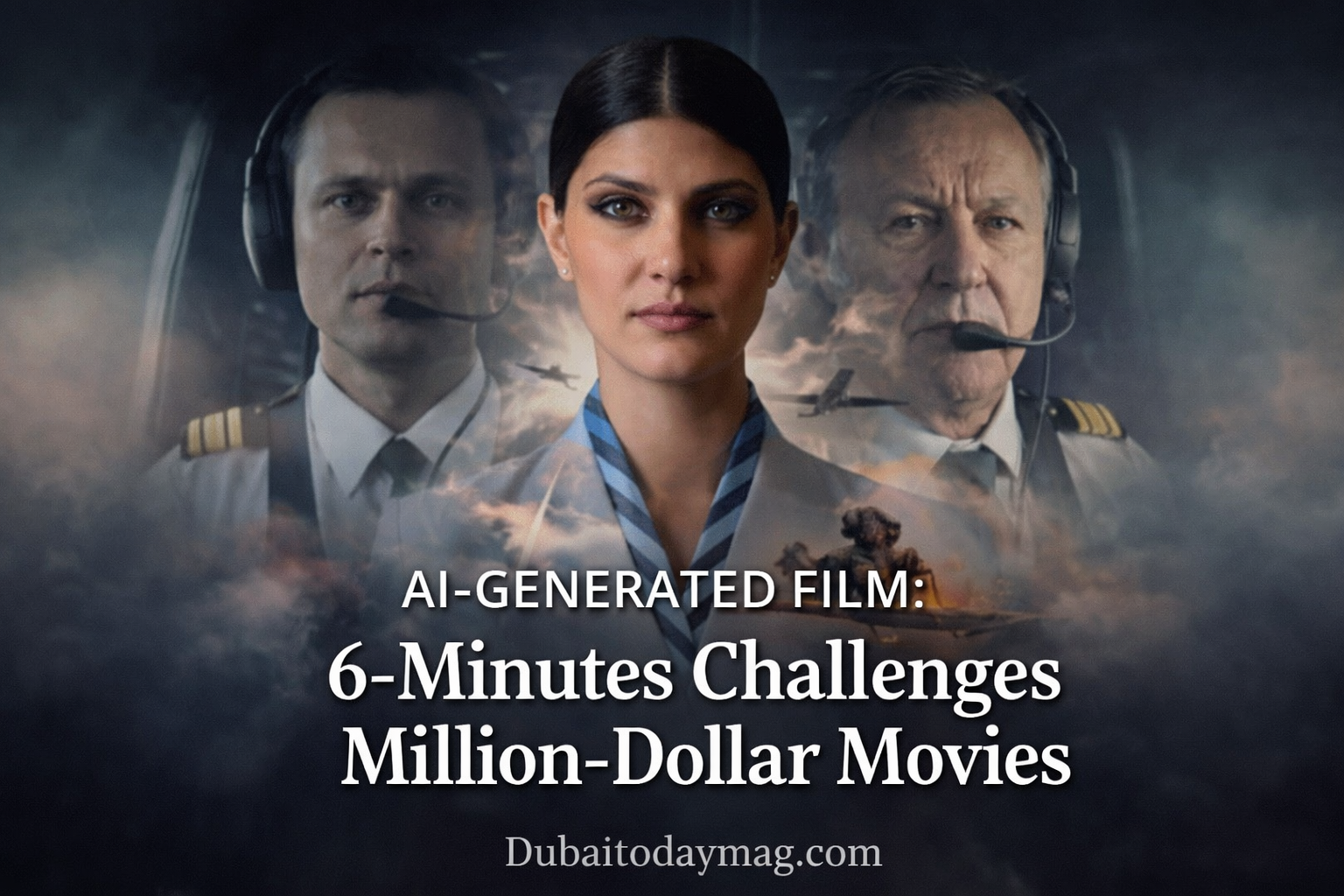
Artificial intelligence is changing everything we know about making movies! A stunning new AI-generated film about a plane crash has shocked the world by proving that incredible cinema doesn’t need huge Hollywood budgets anymore.
What is This Revolutionary AI-Generated Film?
A groundbreaking 6-minute AI film depicting a plane crash on the Baku-Grozny route has captured global attention in December 2025. This short movie was created entirely using artificial intelligence technologies, without traditional cameras, actors, or film crews!
The film shows the terrifying moments inside an aircraft cabin during a crash. What makes it special is how real everything looks and feels – passenger reactions, facial expressions, and emotions are captured with amazing detail.
This AI cinema project proves that technology has reached a new level where machines can tell deeply human stories.
How Was the AI Film Created?
The production process behind this AI-generated film is mind-blowing. Here’s what the creators used:
Production statistics:
- Approximately 40,000 AI-generated images
- Nearly 10,000 video segments created by AI systems
- All footage produced using modern AI tools
- Zero traditional filming equipment needed
Under normal Hollywood conditions, creating a film with this level of realism would cost millions of dollars. The AI approach completed everything at a tiny fraction of traditional costs!
The Shocking Realism of AI Cinema
What’s making everyone talk about this AI film is its incredible realism. The movie doesn’t look fake or computer-generated at all!
What makes it realistic:
Emotional depth: Passengers’ fear and panic look completely genuine and human
Facial expressions: Every face shows detailed emotions that seem naturally captured
Camera angles: The cinematography matches professional disaster movie standards
Physical details: Movement, lighting, and atmosphere all feel authentic
Immersive experience: Viewers report feeling like they’re actually inside the crashing plane
Many people watching the film can’t believe it wasn’t shot with real actors and cameras!
Traditional Filmmaking vs AI Film Production
Let’s compare how this AI-generated film differs from traditional Hollywood productions:
Traditional filmmaking costs:
- Hiring actors and crew: Hundreds of thousands to millions
- Equipment rental: Expensive cameras, lighting, sound gear
- Location fees: Renting aircraft interiors or building sets
- Post-production: Editing, visual effects, sound design
- Time: Months or years from start to finish
- Total: Multi-million dollar budget
AI film production costs:
- AI software subscriptions: A few hundred to few thousand dollars
- Computing power: Relatively affordable cloud services
- Creative team: Small group of AI specialists
- Time: Weeks instead of months
- Total: Fraction of traditional costs
The difference is absolutely revolutionary!
Who Created This AI Cinema Masterpiece?
The AI film was produced by a talented team using artificial intelligence tools:
Creative team:
- AI Artist: Sarvan Huseyn
- AI Assistant: Nazrin Mardanli
- AI Director: Babek Subhani
- Project Manager: Dilara Aliyeva
- Screenwriter: Fariz Aliyev
Notice the job titles include “AI Artist” and “AI Director” – these are brand new professions that didn’t exist just a few years ago!
This team guided the AI systems to create the film, proving that humans and artificial intelligence can work together to make amazing art.
Global Reaction to the AI-Generated Film
When the 6-minute AI film was released on December 26, 2025, the response was immediate and overwhelming:
Social media reactions:
- Thousands of shares across platforms
- Viewers expressing shock at the realism
- Film industry professionals praising the achievement
- Debates about the future of cinema
Industry expert opinions:
- Many called it a “milestone in AI-driven storytelling”
- Some described it as the future of independent filmmaking
- Others worried about implications for traditional film jobs
The film sparked important conversations about where AI cinema is heading.
What This Means for the Movie Industry
This AI-generated film isn’t just impressive – it’s potentially industry-changing. Here’s why:
For independent filmmakers:
- They can now create Hollywood-quality content without huge budgets
- Story ideas that seemed impossible become achievable
- Geographic location doesn’t matter anymore
For big studios:
- They might need to compete with AI-produced content
- Production costs could drop dramatically
- New creative possibilities open up
For audiences:
- More diverse stories from creators worldwide
- Faster production means more content
- Potentially lower streaming costs
For actors and crew:
- New questions about job security arise
- But also new AI-related jobs are created
- Skills need to adapt to changing technology
The Technical Process Behind AI Film Creation
How exactly did the creators make this AI film? Let’s break down the process:
Step 1: Script and storyboarding The screenwriter creates the story, just like traditional films
Step 2: AI image generation Artificial intelligence creates thousands of still images based on descriptions
Step 3: AI video synthesis The AI combines images into moving video segments
Step 4: Scene compilation The team assembles 10,000 video segments into coherent scenes
Step 5: AI editing and refinement The AI director guides the editing process for emotional impact
Step 6: Sound and music Audio elements are added (possibly also AI-generated)
Step 7: Final touches The project manager oversees quality and consistency
This process is completely different from traditional filmmaking!
AI Tools Used in Modern Film Production
While the creators haven’t specified exact tools, current AI cinema technology likely includes:
Popular AI film tools in 2025:
- Runway Gen-3: Advanced video generation from text
- Midjourney: High-quality image creation
- Pika Labs: Text-to-video transformation
- Stable Diffusion: Customizable image generation
- ElevenLabs: AI voice synthesis
- Sora (OpenAI): Realistic video generation
These tools are becoming more powerful every month, making AI-generated films increasingly realistic.
Ethical Questions About AI Cinema
The success of this AI film raises important ethical questions:
Copyright concerns:
- Who owns an AI-generated film?
- What if AI was trained on copyrighted movies?
- How do we protect original human creativity?
Job displacement worries:
- Will actors lose work to AI characters?
- What happens to camera operators and crew?
- Can entire film industries be disrupted?
Authenticity debates:
- Is AI art “real” art?
- Does removing human performance reduce value?
- Where’s the line between tool and creator?
Representation issues:
- Can AI perpetuate biases?
- Who controls the narratives AI tells?
- Are diverse voices included in AI training?
These are complex questions without easy answers.
The Future of AI-Generated Films
Based on this breakthrough AI cinema project, here’s what we might see soon:
In the next 1-2 years:
- Feature-length AI films reaching theaters
- Hybrid productions mixing AI and traditional filming
- Netflix and streaming services investing in AI content
- Film festivals creating AI film categories
In 3-5 years:
- Personalized movies generated for individual viewers
- Real-time film creation based on audience feedback
- Virtual actors becoming indistinguishable from real ones
- Dramatically reduced film production costs everywhere
In 5-10 years:
- Most independent films using significant AI assistance
- New film genres impossible without AI technology
- Complete democratization of film production
- Possible regulation of AI in entertainment
The changes could be absolutely transformative!
Why This AI Film Matters Beyond Cinema
This 6-minute AI film represents something bigger than just movies:
Cultural significance: Artificial intelligence is proving it can handle complex emotional storytelling, not just technical tasks.
Economic impact: Creative industries worldwide will need to adapt their business models as production costs plummet.
Educational opportunities: Film schools must teach AI tools alongside traditional techniques.
Accessibility revolution: Anyone with a good story and basic AI knowledge can potentially create professional content.
Global storytelling: Voices from developing countries can compete with Hollywood without massive funding.
This single short film might be remembered as the moment AI cinema truly arrived.
How to Start Creating Your Own AI Films
Inspired by this AI-generated film? Here’s how beginners can start:
Step 1: Learn basic AI tools
- Try free versions of Midjourney or Stable Diffusion
- Watch YouTube tutorials on AI video creation
- Join online communities of AI creators
Step 2: Develop strong storytelling skills
- AI is just a tool – you still need good stories
- Study traditional screenwriting and cinematography
- Understand what makes films emotionally engaging
Step 3: Experiment with short projects
- Start with 30-second clips, not full movies
- Practice generating consistent characters
- Learn to maintain visual continuity
Step 4: Invest in better tools
- Upgrade to paid AI services as you improve
- Get more computing power for faster generation
- Build a portfolio of AI film work
Step 5: Collaborate with others
- Find writers, musicians, and other AI artists
- Share techniques and learn together
- Enter AI film competitions and festivals
The barrier to entry is lower than ever before!
Conclusion: A New Chapter in Cinema History
The 6-minute AI-generated film about the Baku-Grozny plane crash represents a historic moment in cinema. What once required millions of dollars and massive crews can now be achieved with artificial intelligence, creativity, and a small team.
This AI cinema breakthrough proves that technology isn’t just changing HOW movies are made – it’s changing WHO can make them. Stories from any corner of the world, regardless of budget, can now compete with Hollywood productions in visual quality.
Whether you’re excited or worried about AI-generated films, one thing is certain: cinema will never be the same. We’re witnessing the birth of a new era where imagination matters more than money, and where artificial intelligence amplifies human creativity rather than replacing it.
The future of film is here, and it’s being generated at 40,000 images at a time.
Read More : Audi e-Tron GT: Most Powerful Electric Car Revealed”
