





Discover how GCC smart cities development uses systems-based planning to create better transport, housing, and cleaner environment for growing populations.
Introduction
Cities in the GCC (Gulf Cooperation Council) are growing fast. More people are moving to urban areas every year. This growth brings exciting opportunities but also big challenges. To build better cities, leaders are using smart planning methods that connect different city systems together.
What is Systems-Based Thinking?
Think of a city like your body. Your heart, lungs, and brain all work together. If one part doesn’t work well, the whole body suffers. Similarly, GCC smart cities development means planning roads, homes, energy, and technology to work as one team.
Why This Matters Now
Between 2020 and 2030, GCC cities will welcome 30% more residents. That’s like adding millions of new neighbors! Cities need smart solutions to handle:
- More traffic on roads
- More homes for families
- More electricity and water
- Cleaner air and cooler streets
Real Examples: Cities Doing It Right
Dubai’s Smart Approach
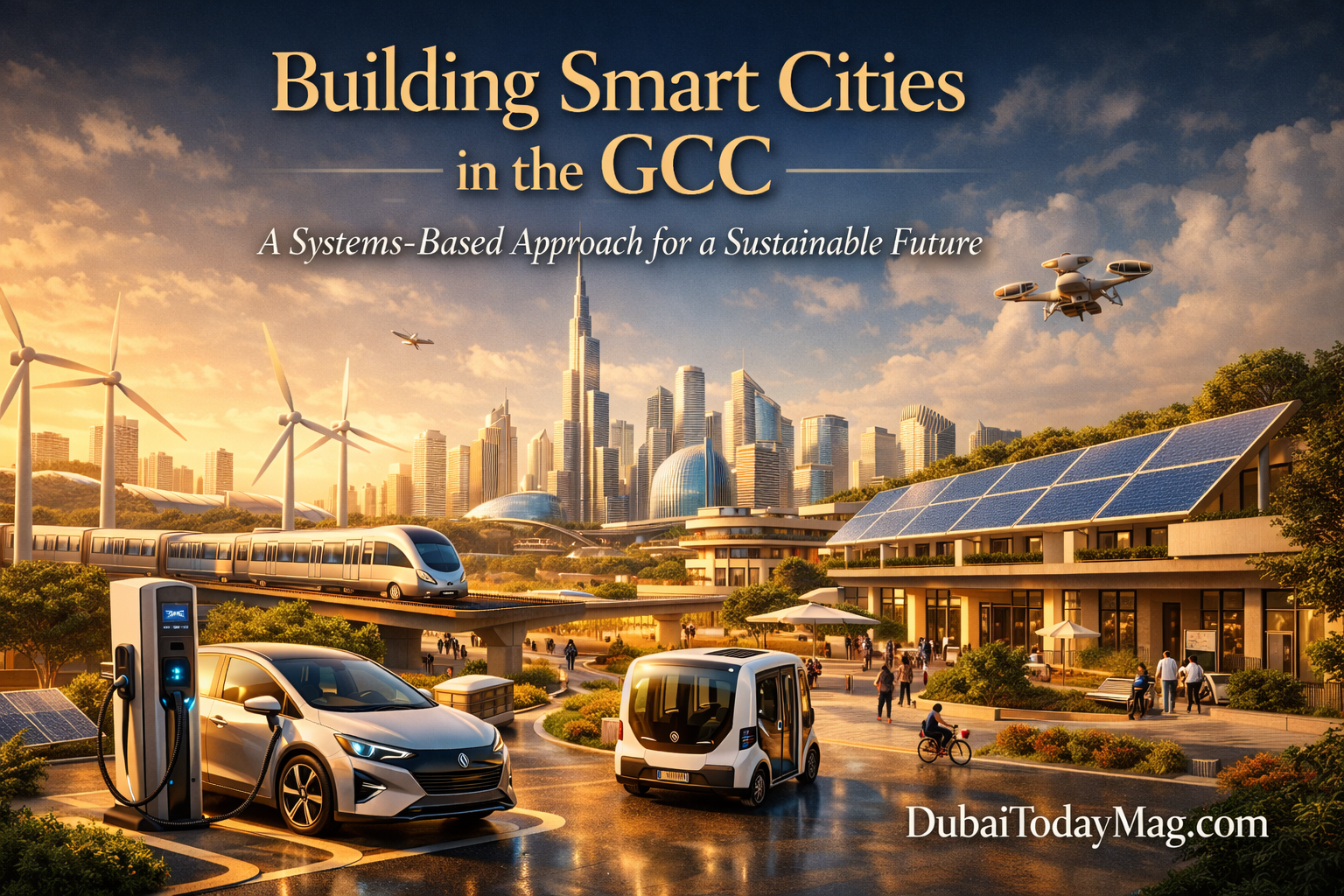
Dubai shows how smart city planning works. The city is building:
- Electric vehicle charging stations
- Metro and bus networks
- Self-driving car tests
- Digital apps for easy travel
All these projects work together like puzzle pieces fitting perfectly.
Riyadh’s Big Vision
Riyadh is building a huge metro system with green parks and new neighborhoods. Everything is planned together, not separately. This helps people travel easier and live better.
Singapore and Copenhagen
These global cities prove the system works. Singapore plans homes near train stations. Copenhagen connects bike lanes with bus stops and creates shaded walking paths.
What People Really Want
A survey asked 1,800 UAE residents what they care about most. Here’s what they said:
Top Priorities:
- Easy and quick commutes to work or school
- Safe and clean neighborhoods
- Affordable homes for families
Biggest Problem: Nearly one-third of people say traffic jams are their biggest daily challenge.
Current Mobility Challenges
High Car Dependency
About 90% of UAE residents drive petrol or diesel cars. This happens because cities were designed for cars, not people.
Public Transport Gaps
Two out of three people rarely use buses or metros. Why? The journey takes too long. Getting from home to the station, then station to destination is difficult.
Interest in Green Vehicles
Good news! One in four people wants to buy electric or hybrid cars. However, 28% say there aren’t enough charging stations nearby.
What Future GCC Smart Cities Could Look Like
Imagine a city where everything works smoothly:
Transportation:
- Electric car chargers at shopping malls, offices, and homes
- Metro stations within walking distance
- Shaded sidewalks connecting buses to metros
- Apps showing real-time bus and train schedules
Neighborhoods:
- Homes near schools, parks, and shops
- Safe bike lanes on every street
- Green spaces to keep areas cool
- Clean air and quiet streets
Energy:
- Solar panels on buildings
- Smart electricity grids
- Charging stations powered by renewable energy
When these systems connect, choosing green transport becomes easy and convenient.
Why the GCC Can Lead
The GCC region has special advantages:
- Strong Vision: National plans like UAE Vision 2030 and Saudi Vision 2030
- Available Money: Resources to invest in big projects
- Young Population: Tech-savvy residents ready for change
- New Districts: Building from scratch is easier than fixing old cities
- Fast Decision-Making: Governments can coordinate quickly
Benefits for Everyone
Systems-based planning creates cities where:
- Commutes are shorter and safer
- Streets have shade and are walkable
- Air is cleaner and healthier
- Public transport is reliable
- Buildings stay cool despite hot weather
Moreover, these cities are better for the environment and future generations.
The Path Forward
GCC cities have an amazing opportunity. By planning smart from the beginning, they can create urban spaces where:
- Technology helps daily life
- Green choices are convenient choices
- Communities are connected
- Everyone enjoys better quality of life
As a result, the region can become a global example of how modern cities should work.
Conclusion
The future of GCC smart cities development is bright. However, success requires thinking about cities as complete systems, not separate parts. When transport, housing, energy, and technology work together, cities become wonderful places to live, work, and play.
The GCC is ready to build cities that put people first—cities designed for happiness, health, and sustainability.
Reference : khaleejtimes
